Capital Gains Tax on US Stocks Explained (2026 Guide for USA Investors)

Investing in U.S. stocks can be rewarding — but understanding how capital gains tax works is crucial to planning your investment strategy and maximizing after‑tax returns. In this long‑form article, we’ll break down the rules, rates, examples, official links (including IRS), and actionable insights for U.S. investors.
Table of Contents
What Is Capital Gains Tax?
Short‑Term vs Long‑Term Capital Gains
2025–2026 Capital Gains Tax Rate Tables
How Capital Gains Are Calculated
Net Investment Income Tax (NIIT) Explained
Reporting Gains: IRS Form 8949 & Schedule D
Example Scenarios
Which Is Right for You?
Risks & Disclaimer
CTA: Compare Investment Platforms / Check Current Rates
1. What Is Capital Gains Tax?
Capital gains tax is the federal tax applied to the profit you realize when you sell an asset — like stocks — for more than you paid. The key factor that determines your tax rate is how long you held the investment before selling. Generally:
Short‑term gains (≤ 1 year) are taxed at ordinary income tax rates.
Long‑term gains (> 1 year) receive preferential tax rates. (City National Bank)
The Internal Revenue Service (IRS) provides the official tax definitions and rules:
👉 Official IRS Topic No. 409: Capital gains and losses: https://www.irs.gov/taxtopics/tc409 (IRS)
2. Short‑Term vs Long‑Term Capital Gains
Short‑Term Capital Gains
Applies when you sell stocks you’ve held one year or less.
Taxed at your ordinary income tax rates (10% to 37%, depending on your total taxable income).
👉 Similar to ordinary wages. (TurboTax)
Long‑Term Capital Gains
Applies if you held stocks for more than one year.
Federal tax rates are 0%, 15% or 20%, depending on your income level and filing status.
👉 These preferential rates are designed to encourage long‑term investing. (Fidelity)
3. 2025–2026 Capital Gains Tax Rate Tables
Long‑Term Capital Gains (2025 — filing in 2026)
| Filing Status | 0% | 15% | 20% |
|---|---|---|---|
| Single | ≤ $48,350 | $48,351–$533,400 | ≥ $533,401 |
| Married Filing Jointly | ≤ $96,700 | $96,701–$600,050 | ≥ $600,051 |
| Head of Household | ≤ $64,750 | $64,751–$566,700 | ≥ $566,701 |
Long‑Term Capital Gains (2026 — filing in 2027)
| Filing Status | 0% | 15% | 20% |
|---|---|---|---|
| Single | ≤ $49,450 | $49,451–$545,500 | ≥ $545,501 |
| Married Filing Jointly | ≤ $98,900 | $98,901–$613,700 | ≥ $613,701 |
| Head of Household | ≤ $66,200 | $66,201–$579,600 | ≥ $579,601 |
Short‑Term Capital Gains
Short‑term gains use the same brackets as ordinary income — up to 37%. (TurboTax)
4. How Capital Gains Are Calculated
Capital gain = Selling Price − Cost Basis
Your cost basis is generally what you paid for the shares, including commissions or fees. When you sell the stock, the difference becomes your gain (or loss).
If you have multiple lots of the same stock, the FIFO (First In, First Out) method is often used to determine which shares were sold first. (Winvesta)
5. Net Investment Income Tax (NIIT)
High‑income investors may owe an additional 3.8% Net Investment Income Tax (NIIT) on top of the capital gains tax if their income exceeds certain thresholds (e.g., $200,000 single, $250,000 married filing jointly). (U.S. Bank)
6. Reporting Capital Gains (IRS Forms)
To report stock sales and calculate gains/losses, most investors must file:
Form 8949 – Lists individual sales transactions.
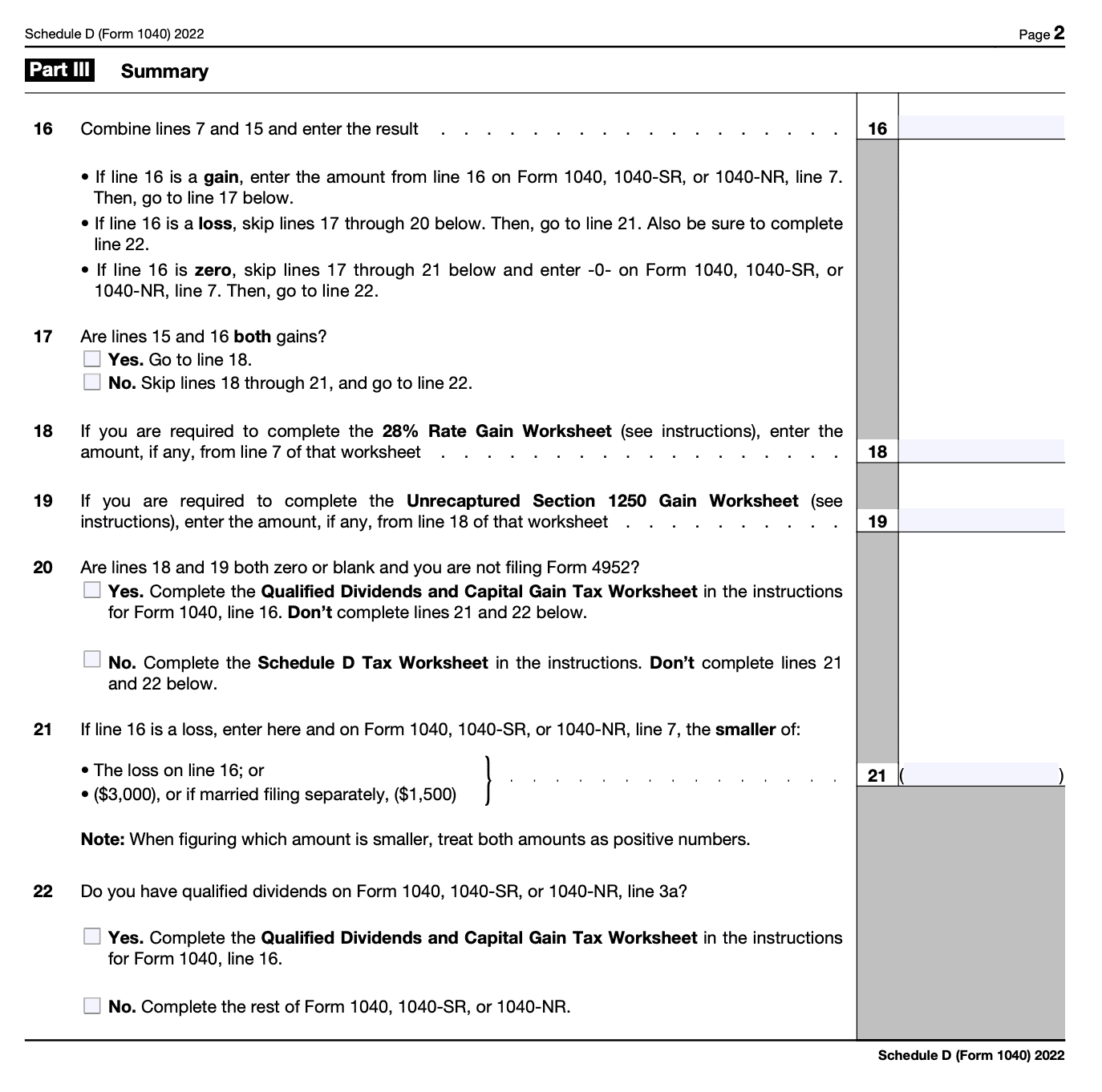
Schedule D (Form 1040) – Summarizes total capital gains or losses. (Investopedia)
Official forms here: https://www.irs.gov/forms‑instructions

7. Example Scenarios
Scenario A — Short‑Term
You bought 100 shares of XYZ at $50 and sold them 8 months later at $80.
Profit = $3,000
Taxed at your ordinary rate — if you’re in the 24% bracket, the tax is roughly $720.
(TurboTax)
Scenario B — Long‑Term
You held the same shares for 18 months instead.
Profit = $3,000
If taxable income places you in the 15% long‑term bracket, your tax is $450. (Fidelity)
8. Which Is Right for You?
| Strategy | Best For | Considerations |
|---|---|---|
| Hold Long‑Term | Investors seeking lower taxes | Preferential rates; better for buy‑and‑hold |
| Short‑Term Trading | Active traders | Flexible but higher tax rates |
| Tax‑Loss Harvesting | Reducing tax bill | Requires careful timing and rules |
| Tax‑Advantaged Accounts | IRA, 401(k), Roth | Gains may be deferred or tax‑free |
👉 Choosing the right strategy depends on your investment horizon, tax bracket, and financial goals.
9. Risk Disclaimer
This article is educational only and does not constitute tax, legal, or financial advice. Always consult a qualified tax advisor or financial planner before making tax‑related decisions.
10. Call to Action
Ready to take control of your investment taxes and returns?
👉 Compare investment platforms tailored for tax‑efficient trading.
👉 Check current capital gains tax rates for your income bracket and year.
Author Bio
Azka – Financial Enthusiast
Azka is a passionate finance writer and investor specializing in tax‑efficient investing strategies, stock market insights, and financial planning tips for global and U.S. audiences.
Comments
Post a Comment